Top videos

Bespoke Illustration

“The ones that come across sweet, humble and full of praise of you in the presence of yourself and others are the ones that will silently sting you when you least expect. Aum Namaha Shivaya.” says Guru Ka Das Walia
“Before serving others, one must serve himself to stay afloat to be able to serve others with heart, mind and soul. Aum Namaha Shivaya.” Says Guru Ka Das Walia
“Thy prays publicly for the well-being of others, yet thys mind is in conflict with what is being said, only to realise that thy is a hypocrite and not on the path of spiritualism. Aum Namaha Shivaya.” says Guru Ka Das Walia
“Speaking on spirituality or reciting old sayings has no value when one's actions are not in line with the saying of the wise words. Aum Namaha Shivay.” Says Guru Ka Das Walia

"Thy blamed everyone else but thy self for thy’s problems only to realise later that thy was not taking responsibility because thy was unconscious and thoughtless about personal actions, and thy chose what thy wanted to be responsible for. Aum Namaha Shivaya.” Says Guru Ka Das Walia
“We all see what we want to see till a day comes when the Lord shows you what you should have seen. Aum Namaha Shivaya.” Guru Ka Das Walia

“In today’s world, one must question if they are asked to do selfless service for an organisation, that they take up willingly to remain on the path of spiritualism as it has become a new way of taking advantage of people’s time, energy, effort and money where the only beneficiary is the organisation and the people that run it, leaving you questioning what just happened? Aum Namaha Shivaya.” Guru Ka Das Walia
"The Ones who attain the Supreme are like flowers. They give their fragrance whilst on the plant, or even after they have been plucked or even after they have been dried. Flowers are offered at birth, at death, during celebrations, in temples, churches, offices, and homes, and are part of all happy and sad occasions. Flowers are always spreading their pleasant fragrance, no matter where they are, and they are always pleasant to the eyes that see. They can be recognised by their fragrances anywhere. We all have one life and one opportunity to spread our fragrance which will remain even after the loss of our physical body. So life should be lived in a way to leave such fragrance through the way of life. Aum Namaha Shivaya." Says Guru Ka Das Walia

"One man can change the world if he wants to. So, stop looking at your miseries, feeling sorry for yourself, being unhappy and sad. Instead, move forward like a champion. Do what you have to do to change your destiny; only you can make the difference if you want to. Aum Namaha Shivaya." Says Guru Ka Das Walia
"The one who realises his colors and lives in those moments and surrenders to the moment will never falter as it is the moment that takes over. Aum Namaha Shivaya." Says Guru Ka Das Walia
"Our love no one will understand, not even thy, only he knows no words can explain, and no emotions can express all thy knows, you are part of me, and thy is a part of you, and together we are one part of the One. Aum Namaha Shivaya." Says Guru Ka Das Walia
"A new year filled with a lot of hope, just like the year that just passed. The one that appreciates every moment, learns from it and allows themself to surrender to the next moment is the one that can fly free and move forward to the next moment. So happy new year, thy prays to Almighty God that he blesses us all with his wisdom in this new year, Aum Namaha Shivaya." Says Guru Ka Das Walia

Narada Muni - Muni is the Sanskrit for Sage; he is a Vedic Sag of the Hindu dharma. In Vedic scriptures, Narada (Sanskrit for Na) means "deity that Brahma invested using the power to create."
He is described in the religious texts of Hinduism as one of the ten Manas– Putras. These are the mind-sons and spirits of Brahma (since his mind was more important than his body) He was also an ardent follower of Lord Vishnu.
A Khartal is seen here. He also carries a Veena. His name is Mahathi. He is considered to be one of the great musical instrument makers. Khartal is an old instrument. It's named from two Hindi words - 'Kara/strong> and ’tala/strong>. It's a wooden clapper made with plates or discs that make a clinking noise when they clap together.
The Viena a classic multi-stringed chordophone, is made in the Indian subcontinent. It has a hollow structure and two large resonance gourds beneath each end. It has four strings. There are three drone strings and one melody string. To play, the musician will pluck the melody strings upwards.
He uses them to accompany his singing hymns. Folklore often portrays him as a pure, elevated spirit who glorifies Vishnu in his devotional songs. Here he is demonstrating Bhakti Java, which literally means, Spiritual Way or Practice. Arguably the greatest book about love is The Narada Bhakti Sutra.
Narada is probably the most traveled ancient Indian Sage with the ability to visit distant worlds. He is featured in several Hindu texts such as the Mahabharata or the Ramayana and also the epics within the Puranas.
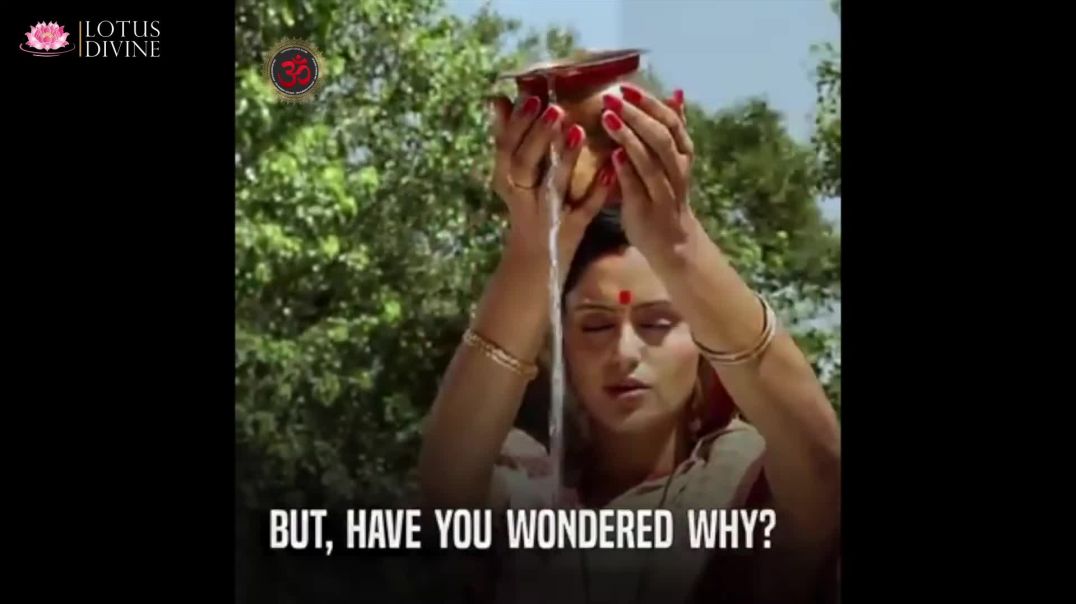
Tulsi or Tulasi (Holy Basil) or Vrinda is a sacred plant in Hindu belief. Hindus regard it as an early manifestation of the goddess Tulsi/Vrinda; she is regarded as the avatar of Lakshmi, and thus the consort of the god Vishnu. The offering of its leaves is mandatory in ritualistic worship of Vishnu and his avatars like Krishna and Vithoba.
Many Hindus have tulsi plants growing in front of or near their home, often in special pots or a special masonry structure known as Tulsi Vrindavan as this is related to their culture. Traditionally, Tulsi is planted in the center of the central courtyard of Hindu houses. The plant is cultivated for religious purposes, and for its essential oil.
Baba jinko yad kare wo log nirale hote hain
baba jinka naam pukare wo kismet wale hote hain
chalo bulawa ayah hai baba ne bulaya hai
chalo bulawa ayah hai...
chalo bulawa ayah hai bhole ne bulaya hai
chalo bulawa ayah hai bhole ne bulaya hai
unche parvat pe shiv shambhoo ne darbar sajaya hai
chalo bulawa ayah hai baba ne bulaya hai
chalo bulawa ayah hai baba ne bulaya hai
sare jag me ek thikana sare gam ke maaro ka
sare jag me ek thikana sare gam ke maaro ka
rasta dekh rahe hai baba apni ankh ke taaron ka
rasta dekh rahe hai baba apni ankh ke taaron ka
mast hawaon ka ek jhoka ye sandesha laya hai
chalo bulawa ayah ai bhole ne bulaya hai
jai bhole ki jai baba ki
jai shiv shambhoo jai baba ki
sare bolo jai baba ki
milke bolo hai baba ki
jai bhole ki kehte jao aane jaane walo ko
chalte jao tum mat dekho apne pao ke chaalo ko
ho.. jisne jitna dard saha hai utna chain bhi paya hai
chalo bulawa aya hai bhole ne bulaya hai
shiv shambhoo ke mandir me
shiv shambhoo ke mandir me sab log murade pate hai
rote rote aate hai haste haste jate hai
mai bhi mang ke dekhu jisne jo managa wo paya hai
chalo bulawa ayah ai baba ne bulaya hai
mai bhi to savak hoo baba tu hi mujhko pehchane
mai bhi to savak hoo baba tu hi mujhko pehchane
bhakto ka dukh kya hota hai tere siva koi kya jane
duniya ne thukraya jisko tune gale lagaya hai
chalo bulawa aya hai bhole ne bulaya hai
chalo bulawa aya hai bhole ne bulaya hai
chalo bulawa aya, hai baba ne bulaya hai
chalo bulawa aya hai baba ne bulaya hai
chalo bulawa aya hai baba ne bulaya hai
chalo bulawa aya hai baba ne bulaya hai
baba ne bulaya hai baba ne bulaya hai
Lotus Divine Ancient Book Concept
positive quotes, motivation quotes, spiritual quotes, motivation guidance, spiritual guidance, positive guidance,
A story about the choices we make and how we choose to live our lives - for better or for worse.
positive quotes, motivation quotes, spiritual quotes, motivation guidance, spiritual guidance, positive guidance,